Lumus: Psychic & Tarot Reading
- 4.4
- Rating
- 500.00K
- Installs
- Free
- Price

 Analysis by App-foxy
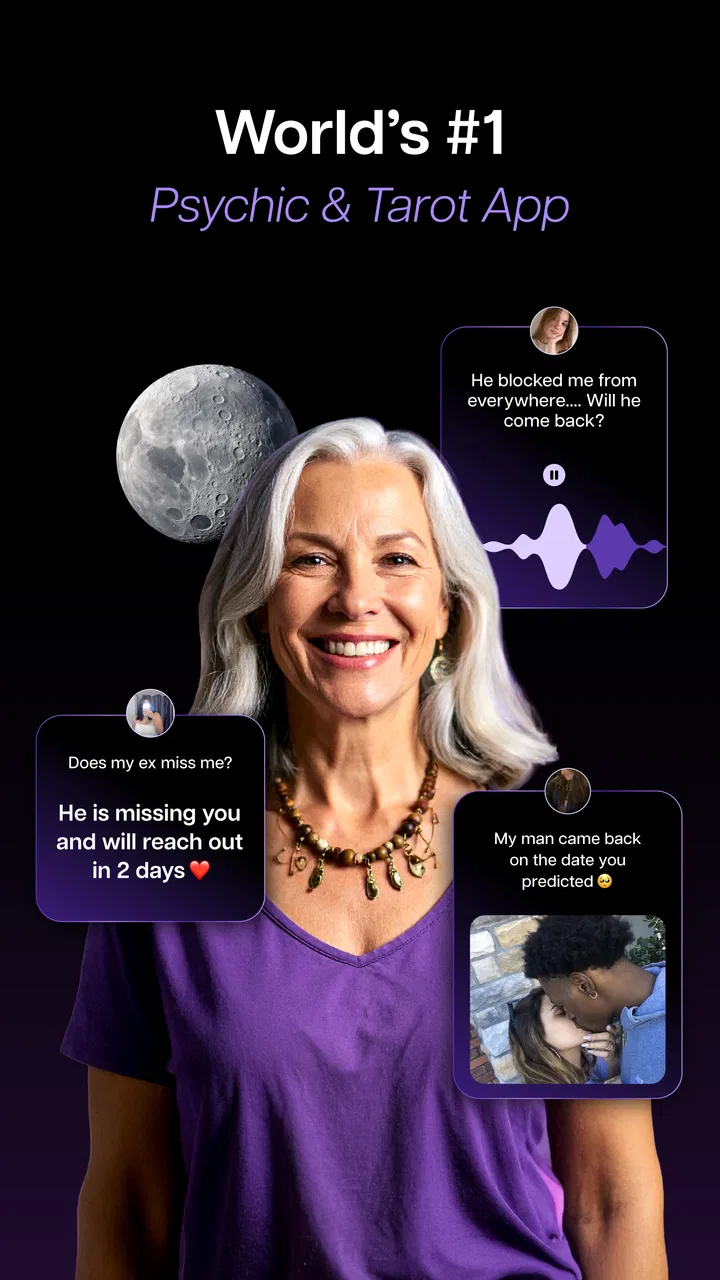
I tried Lumus: Psychic & Tarot Reading as a lifestyle app for those moments when you want a quick tarot-style reflection or a conversation with a psychic reader without arranging a session elsewhere. Its main appeal is immediacy: you open it, choose the kind of guidance you are looking for, and can begin a chat rather than waiting for a long appointment. The store promise of a first chat at no cost makes it easier to test the experience before deciding whether it belongs in your routine.
My overall impression is that Lumus works best as a private, personal tool for reflection. I would not treat it as a replacement for professional counselling, financial advice, medical guidance, or a serious conversation with someone involved in a real-life problem. Used with that boundary in mind, it can be an entertaining way to organize your thoughts when you feel stuck. The app is free to install, is aimed at Everyone, and comes from the developer Psychics.
How Lumus fits into everyday shared-device use
A realistic use case is a household with one tablet or a phone that several people occasionally borrow. One person may open Lumus after a difficult workday, while another family member later uses the same device for an unrelated task. That arrangement is possible in a practical sense, but I would not confuse shared hardware with shared access to personal conversations. A psychic or tarot chat can contain private feelings, relationship questions, or decisions that another person should not casually read.
You May Also Like

 Blood Strike: 2.5 Anniversary
Blood Strike’s Loadouts Turn Every Drop Into a Tactical Gamble
A close look at Blood Strike’s custom loadouts: how fast access to signature weapons reshapes its battle royale rhythm, rewards preparation, and narrows the gap between fights.

 Pandora - Music & Podcasts
Pandora’s Music Is Easy to Start, but Harder to Recover
Pandora’s strength is its low-effort path from a seed to a station. Its weak spot is how much confidence it asks you to place in connection, setup, and quiet recovery.

 8 Ball Pool
 Is Built on Rivalries, Rematches, and Routine
A close look at the rivalries, rematches, shared routines, and unanswered safety questions that turn a quick pool match into a persistent mobile community.

 Samsung Music
’s Quiet Strength Is Playing What You Already Own
Its reach comes less from spectacle than from dependable access to a personal library. That simplicity is both the app’s strongest retention engine and its ceiling.

 AccuWeather: Weather Radar
AccuWeather Review: A Quick, Clear Forecast for Everyday Decisions
For everyday plans, the best forecast is the one you can understand quickly. AccuWeather makes rain timing, radar, and local conditions easy to act on, with a few trade-offs.

 Hill Climb Racing
Why Hill Climb Racing Still Turns Crashes Into One More Run
A tiny car, a bumpy hill and one more upgrade: Hill Climb Racing keeps resurfacing because its simple chaos makes every near-miss feel personal.
More From Our News Desk
View All News


For that reason, I would use Lumus as an individual experience even when the device is shared. Before starting a conversation, I would check who is nearby, close other apps, and avoid leaving a chat visible when handing the phone to someone else. This is not a special Lumus feature; it is simply sensible behavior for any app that may hold personal discussion on screen.
The app feels more suitable for short, intentional sessions than for leaving open all day. If I wanted a quick perspective on whether I am overthinking a conversation, I could ask one focused question, read the response, and then step away. That is more useful than repeatedly asking the same question until I receive the answer I hope to hear. Tarot-style guidance becomes less helpful when it turns into a loop of reassurance seeking.
In a shared household, coordination also matters. If someone else needs the phone, I would finish the chat, return to a neutral screen, and make sure notifications or previews are not exposing the subject of the conversation. Since the experience is conversational, the wording of a question can reveal more than a generic horoscope screen would. I would avoid entering names, contact details, or sensitive family information unless it is genuinely necessary for the conversation.
This makes Lumus a better fit for adults who understand the difference between entertainment, reflection, and authority. A teenager might find the app interesting, but I would want a parent or guardian to explain that a psychic reading is not a reliable way to settle safety issues, health concerns, school decisions, or conflicts at home. The Everyone rating describes the broad content classification, not a guarantee that every conversation is appropriate for every child or that every suggestion should be followed.
Starting without turning the app into a decision-maker
The first chat is the most useful part of the low-commitment entry point. I would use it to learn how the conversation feels rather than immediately asking about a major life choice. A simple question about a current mood, a creative block, or a general concern gives me room to judge whether the responses are thoughtful enough to continue with.
A practical tip is to write the question down before opening the chat. This prevents the conversation from drifting and helps separate the issue I actually want to explore from whatever wording appears in the response. I also prefer questions that invite reflection, such as “What might I be overlooking in this situation?” instead of questions that demand certainty about another person’s intentions.
That distinction is important because a reader can easily give a confident-sounding answer to an emotionally loaded question. I would treat the result as a prompt for self-examination, not evidence. If the topic involves a medical symptom, legal dispute, money, personal safety, or a child’s wellbeing, I would use a qualified human source instead. Lumus can help me name a feeling, but it should not carry responsibility for a consequential decision.
What the conversation experience is good at
Lumus is most appealing when I already know what I want to think about but need a different angle. The combination of psychic-style chat and tarot reading gives the experience a more interactive feel than a static daily horoscope. Instead of receiving one short statement and closing the app, I can frame a question in my own words and consider the reply in context.
That flexibility can be useful after a normal everyday situation. Imagine I have had an awkward exchange with a friend and keep replaying it. I could use a short session to describe the situation, ask what emotional assumption I may be making, and then compare the response with what I already know. The valuable part is not proving whether the reading is supernatural; it is creating a pause between the event and my reaction.
I also see a possible use for journaling. After a session, I could copy the central question into a private note and write what I agree or disagree with. Over time, that approach would show whether the app is helping me think more clearly or merely encouraging repeated checking. The app itself does not need to become the record of my life for the exercise to be useful.
Another non-obvious trade-off is the difference between a broad tarot prompt and a very specific personal question. Broad prompts leave more room for interpretation and may feel comfortable when I am just exploring. Specific questions can feel more relevant, but they also make it easier to treat a vague response as a direct prediction. I would start broad, then narrow the discussion only when I understand that the answer is interpretive rather than factual.
Boundaries when several people use one device
For a household, the biggest practical issue is account separation. I would not assume that a shared phone automatically creates separate personal spaces. Before using Lumus around family members, I would check which account is active and whether the conversation remains visible after closing and reopening the app. If another person uses the same device, each user should understand that the app may not be a suitable place for confidential material unless the device and account arrangement genuinely protect it.
I would also avoid treating a partner’s or child’s session as a family activity unless everyone is comfortable participating. Reading someone else’s questions without permission would cross a basic privacy boundary, even if the phone belongs to the household. The same applies to asking the app about another family member and then presenting the response as proof of what that person thinks.
Coordination can be simple: agree that the app is personal, do not share screenshots without permission, and keep serious household decisions outside the reading. If two people want to explore a question together, they can openly create a shared conversation and discuss the response as a prompt. That is very different from secretly using a reading to investigate someone.
These boundaries are especially useful because the app’s conversational format may encourage disclosure. A static card draw can be glanced at and forgotten; a chat can invite more detail. I would keep the information general, particularly on a device that children, guests, or other household members may access.
Age context, trust, and the role of the developer
Lumus is listed for Everyone, which makes it broadly approachable from a content-rating perspective. Even so, I would introduce it to younger users with context rather than presenting it as an authority. Children and teenagers can interpret confident language literally, especially when they are anxious about friendships, school, or family changes. An adult should make clear that a psychic or tarot reading is a form of entertainment and reflection, not a verified forecast.
For adults, the same trust question applies in a different way. I would pay attention to how strongly I am relying on the responses. If I feel unable to make a small decision without opening Lumus, that is a sign to step back. The app is more enjoyable when I choose to consult it, not when I feel compelled to ask again and again.
The developer is Psychics, and the app has reached over one hundred thousand installs with an average rating of four and a half from around one thousand seven hundred ratings. Those figures suggest that many people find the concept appealing, but they do not tell me whether every conversation will match my expectations. Ratings are useful for judging general interest; they are not proof that a reading is accurate or that the app will suit a particular household.
The app was released in August 2024 and is currently at version 1.1.339, with Android support starting from version 7.0. That makes it accessible to a wide range of older Android devices. I would still keep the app updated through the normal store process and check the active account before beginning a personal session, especially on a device used by multiple people.
Where Lumus differs from familiar alternatives
Compared with a traditional tarot deck, Lumus removes the need to learn card meanings, shuffle, or interpret a spread alone. That convenience is its clearest advantage. A physical deck gives me more control over the ritual and can be entirely offline, while Lumus offers a conversational route that may feel easier when I want an immediate exchange.
Compared with a standard horoscope app, Lumus is more interactive. A horoscope usually gives a general message tied to a sign or date, whereas this app is built around asking and discussing a question. That can feel more personal, but it also increases the chance that I will project too much meaning onto a response. The extra interaction is a strength only when I keep my expectations realistic.
Compared with speaking to a licensed therapist or counsellor, Lumus is not the right tool for diagnosis, treatment, crisis support, or structured mental-health care. A professional can ask grounded follow-up questions, understand a broader history, and help create a responsible plan. Lumus may help me reflect before such a conversation, but it cannot replace it.
There is also a trade-off against simply journaling. Writing in a notebook is private, inexpensive, and forces me to generate my own interpretation. Lumus provides an outside voice, which can break a mental stalemate, but that voice may also become too influential. I would choose the app when I want a fresh prompt and choose journaling when I need to hear my own reasoning clearly.
Costs, expectations, and when I would skip it
Lumus is free to install, and the first chat is presented as free, so trying the basic experience does not require an immediate purchase. I would still read each screen carefully before continuing beyond the introductory experience, particularly if the app presents paid options during the conversation. A free starting point should not be mistaken for unlimited access to every part of the service.
I would skip Lumus if I were looking for evidence-based answers, guaranteed predictions, or a formal record of advice. I would also avoid using it while highly distressed if I knew I was likely to accept any reassuring statement without question. In that state, contacting a trusted person or an appropriate professional would be a safer choice.
It is also not ideal for someone who dislikes chat-based guidance. If I prefer quietly drawing cards, reading a guidebook, or writing my own interpretation, the app’s conversational approach may feel intrusive rather than helpful. Likewise, a household that cannot maintain basic screen privacy should avoid entering intimate details on a shared device.
One useful rule is to decide the purpose before opening the app: reflection, entertainment, or a creative prompt. If the purpose changes into seeking permission for a risky action, I would close Lumus and use a more reliable source. That small boundary protects the enjoyable part of the experience without pretending it can answer every kind of question.
My household verdict
I see Lumus as a convenient lifestyle app for private, short sessions with a psychic or tarot-style conversational guide. Its free entry point makes experimentation easy, and its interactive format is more engaging than a one-line horoscope. I especially like it as a way to pause, phrase a concern, and consider an alternative perspective when I am stuck in my own thoughts.
For shared-device households, I would recommend clear account and privacy habits before anyone starts a personal chat. Keep conversations individual, do not inspect another person’s session, and avoid entering information that could cause harm if seen by someone else. With younger users, explain the difference between imaginative guidance and dependable advice even though the app carries an Everyone rating.
My recommendation is therefore conditional but positive: try Lumus if you enjoy tarot and psychic-style reflection and can keep it in the right role. I would not use it as a decision authority, a substitute for professional help, or a way to manage another family member’s choices. When I treat it as a prompt rather than a prediction, the app has a clear place in a personal routine; when I need facts, privacy guarantees, or expert support, another option is better.
FAQs for Lumus: Psychic & Tarot Reading
01What features does Lumus: Psychic & Tarot Reading offer?
Lumus provides a variety of features including psychic readings, tarot card readings, astrology insights, and daily horoscopes. Users can choose from different categories such as love, career, and personal growth. The app also offers live chat sessions with professional psychics and personalized reports based on your astrological sign.
02Is the app free to use, or are there any in-app purchases?
Lumus is free to download, but it includes in-app purchases. While some basic features are accessible without cost, detailed readings or live sessions typically require a fee. Users can choose from various pricing options for different services, and there are often promotions for first-time users.
03How reliable are the readings provided by Lumus?
The app employs verified psychics and tarot readers who have been vetted for accuracy and professionalism. However, like any psychic service, the readings are for entertainment and guidance purposes only. User reviews often highlight the reliability and helpfulness of the insights provided, but individual experiences may vary.
04Can I customize my experience in the Lumus app?
Yes, Lumus allows users to customize their experience by selecting specific areas of life they want guidance in, such as love or career. Users can also follow their favorite psychics and receive personalized content based on their preferences. Notifications can be tailored to receive daily horoscopes and special offers.
05Is my personal information safe with Lumus?
Lumus takes user privacy seriously and implements robust security measures to protect personal information. The app uses encryption protocols to secure data and ensures that user details are not shared with third parties without consent. Always review the privacy policy for more detailed information on data handling.
Pros
- Accurate readings from experienced psychics.
- User-friendly interface with intuitive navigation.
- Wide range of topics like love and career.
- Live chat and video call options available.
- Daily horoscopes and personalized insights.
Cons
- In-app purchases can be expensive.
- Limited free content without subscription.
- Occasional connectivity issues in live sessions.
- Some users report generic predictions.
- Notifications can be overwhelming.

Lumus: Psychic & Tarot Reading
Gallery